Stuck in the Middle: Life as a Sandwich Generation Caregiver


Psst! Over here, down here in between the sliced bread, lettuce, tomato, cheese, and deli meat. Yes, that’s right, I am in the sandwich generation! This term was coined in the early ’80s to describe individuals sandwiched between raising their children and caring for aging parents. We juggle our careers, home responsibilities, and family caregiving duties on both ends.
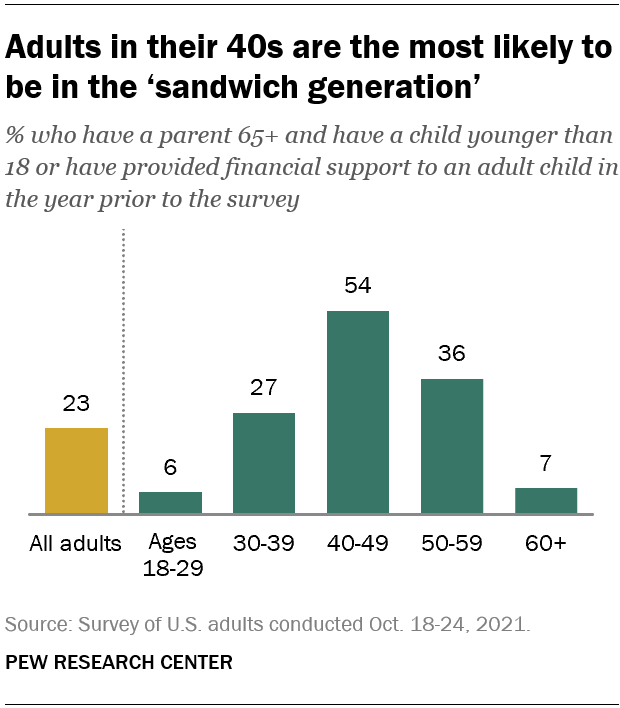
If this sounds familiar, you’re not alone. This group, known as the “sandwich generation,” makes up about 23% of American adults, according to a survey conducted in late 2021.
What Is the Sandwich Generation (And How Did We End Up Here)?
If you’re feeling this squeeze, you’re part of a group that now makes up about 23% of American adults, according to a recent survey. The survey found that the most common age range for sandwich generation members is adults in their forties, with over half (54%) having a parent aged 65 or older while still raising or financially supporting a minor or adult child. For those of us balancing it all, this can feel like a lot—but you’re not alone.
As people get older, the likelihood of being in this position shifts. About 36% of adults in their fifties and 27% of those in their thirties fall into the sandwich generation category. The percentage dips below 10% for adults younger than 30 or older than 60.
Double Duty: Raising Kids While Caring for Parents
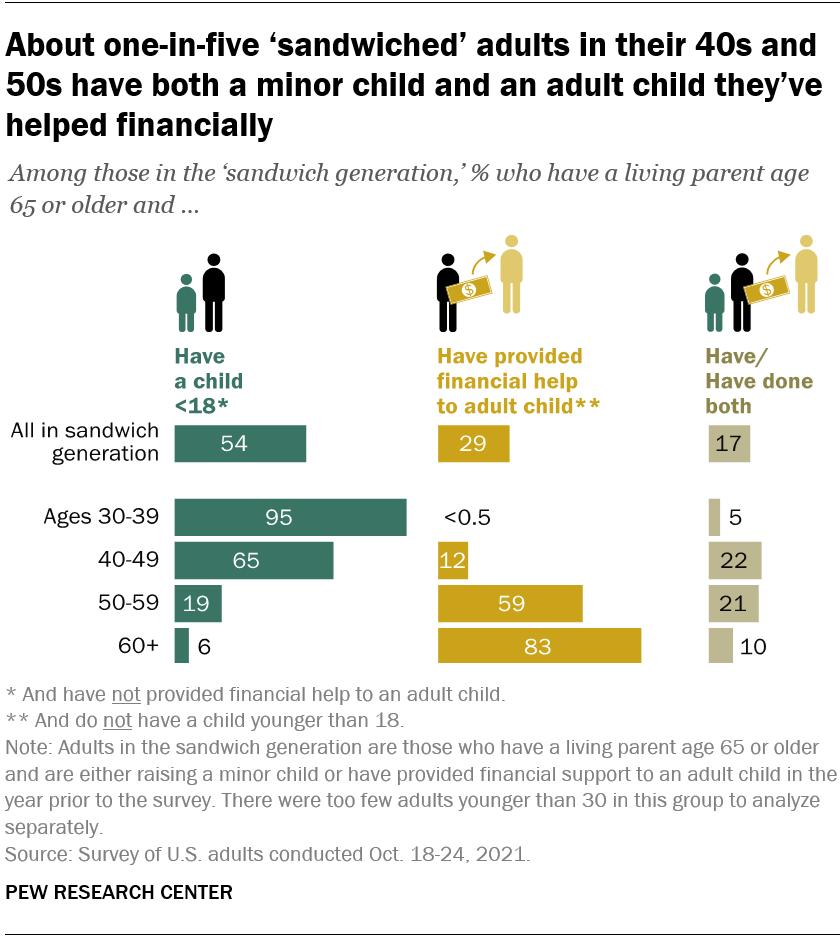
The caregiving mix also changes with age. For those of us in our thirties and forties, it’s all about caring for minor kids while helping our aging parents. But for folks in their fifties and beyond, it shifts to supporting adult children financially while still being there for elderly parents.
Several factors influence whether someone becomes part of this group. Education, income, and marital status are key. People with higher incomes, more education, and those who are married are more likely to find themselves juggling caregiving for both children and elderly parents. One in five of adults in their forties and fifties are supporting both a minor and an adult child at the same time. (No rest for the weary!)
Coping with Dual Caregiving Responsibilities
Being part of the sandwich generation brings unique stressors. Managing the emotional and financial responsibilities of caring for both children and parents can be overwhelming. So, how do these caregivers cope?
- Time Management: Prioritizing daily tasks and setting boundaries is essential. Many in the sandwich generation rely on structured schedules to balance work, family time, and self-care.
- Financial Planning: Dual caregiving can strain financial resources. Seeking professional financial advice can help individuals manage their current responsibilities while safeguarding their future, especially in terms of retirement planning.
- External Support: Hiring professional caregivers or seeking community services for elderly parents can help alleviate some of the burden. Additionally, many turn to technology—such as caregiving apps or virtual health monitoring tools—to streamline tasks and stay on top of both children’s and parents’ needs.
The Satisfaction Paradox: Finding Joy Despite the Juggle
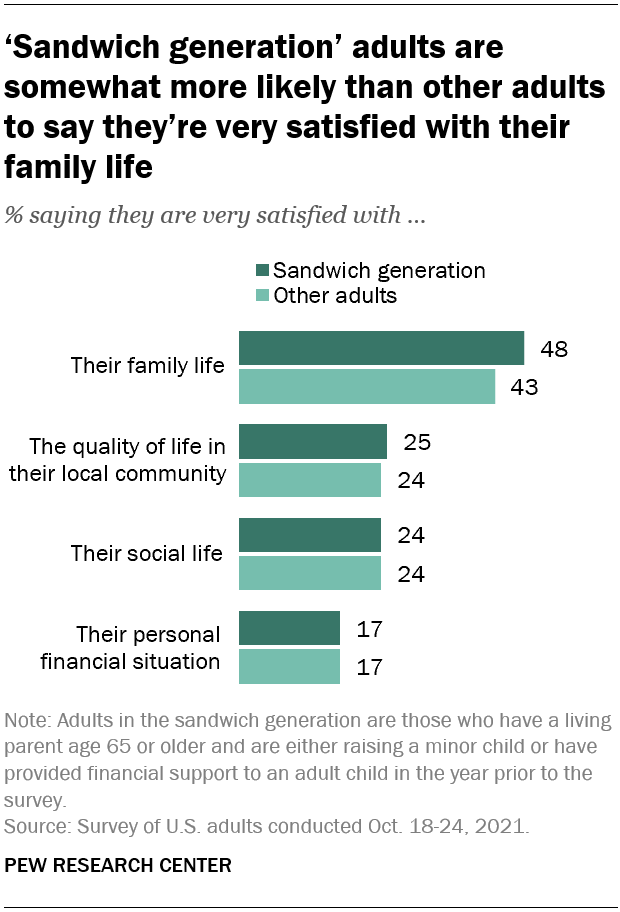
If you feel like you’re balancing too much, here’s an encouraging statistic: adults in the sandwich generation—especially those in their forties—report higher levels of satisfaction with their family life compared to other groups. Crazy, right? It seems that despite the stress, people find meaning and happiness in staying connected to both their children and parents.
However, in other areas—like social satisfaction and personal finances—the difference between sandwich generation members and other adults is less significant.
Multigenerational Living: A Growing Trend in Modern Households
With multigenerational households growing in popularity, about one in five adults—sandwiched or not—now lives with parents, children, or both. And though the rise of multigenerational living isn’t entirely new (we see similar percentages today compared to a 2014 survey), it remains an important part of American family life. As life expectancy increases and young adults face challenges in achieving financial independence, the sandwich generation phenomenon is likely to continue shaping family structures and caregiving responsibilities in the United States.
The sandwich generation will likely be a fact of life for many Americans in the years to come. While caregiving can be challenging, it’s clear that balancing family responsibilities, even at its most stressful, still brings its own rewards.
Feeling overwhelmed by the demands of caring for kids and aging parents?
You’re not alone! Let’s create a financial plan that fits your unique situation. Connect with an advisor and let’s find balance in your busy life!
Categories
Recent Insights
-

Retirees have questions for financial advisers. Here’s what they want to know.
Roughly a third want advice for what to do with the money in their former workplace plan, while nearly 3 in 10 want a withdrawal strategy that turns savings into retirement income. Others seek help with taxes, long-term care planning, debt reduction, or estate planning.
-

Markets & Mindset – July 2026
Lane Jones, Principal and Chief Investment Officer, and Marcos Segrera, Principal and Wealth Manager, help you make sense of what’s happening in today’s markets — and how to stay focused on what matters most.
-

Do You Have More Spatulas Than Financial Accounts? A Case for Consolidation
We added another wooden spatula to our kitchen recently. And when I say another, I mean to an already impressive collection. At this point, we could host a dinner party for 15 people and assign each dish its own spatula. Is that necessary? Probably not. But I am not the chef or the party planner—and…
-

The Cost of a Good Idea — And What Golf Taught Me About Leaving It Alone
I started playing golf about a month ago. And let me be honest with you — it’s the most humbling thing I’ve done in recent memory. I grew up playing baseball, so I figured I’d have at least a fighting chance. The coordination, the swing mechanics — how different could it be? Turns out, very.…
-

Do You Own Your Time?
When a full calendar feels like success I am infamous for having a calendar booked for months in advance. When this first started happening, it felt good. Early in my career, I didn’t have enough work to fill my time, so the goal was simple: get as many meetings booked and clients closed as possible.…