What Issues Should You Consider During a Market Correction?


Markets are in full correction mode. Reminder: A market correction is defined as a drop of at least 10% and a bear market is defined as a drop of 20% or more. The situation in Russia/Ukraine is and will continue to dominate headlines until resolution or something more eye-popping takes the stage. Depending on where you look, things can be even worse than the corrections and bear markets hinted at above. Just take a look at performance over the last year of what were some of the high-flying names of the recent past:
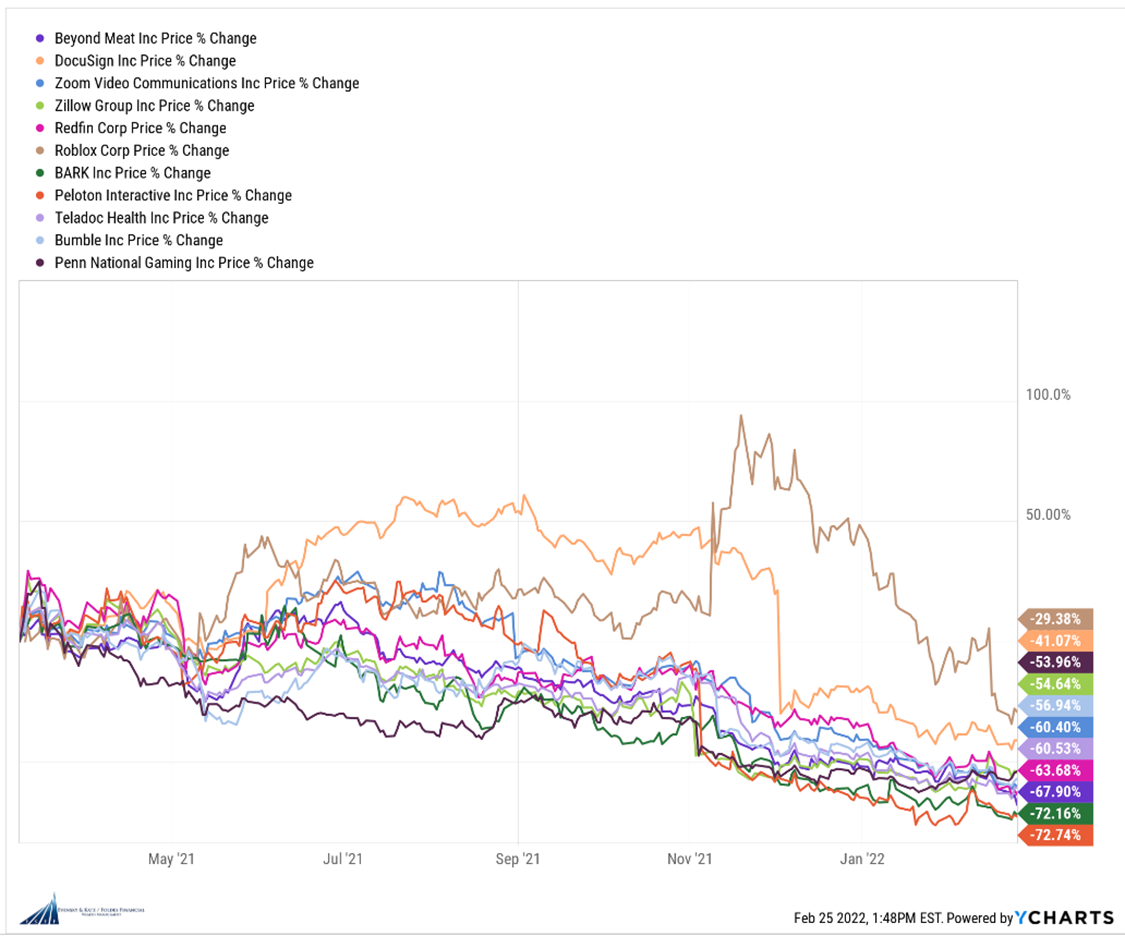
A system that was once awash with liquidity is now tightening and this is the result. Bitcoin and Crypto in general have also taken it on the chin as liquidity leaves the system. The case that these digital tokens/currencies/assets can act as a store of value will continue to be challenged as long as volatility is this high. How do you manage all of this? Unfortunately, you’ve heard this before – DIVERSIFICATION AND A PLAN; that is how. But like most universal truths, it is much easier said than done. Even harder still, is sticking to it when the stuff hits the fan.
So, volatility is here. What now? Assuming we can all agree that trying to time markets, although alluring, is a bad idea, here are a few things to consider if you feel you must act:
- Reexamine your cash flow. Are you going to be tight? Consider having a larger emergency fund.
- Have you invested dollars that you know for certain you will need within 5 years? Reconsider what dollars are meant for long-term investment and which should be kept in cash.
- Is retirement on the horizon? Revisit your plan with your advisor.
- Don’t have a plan? No time like the present to get on that.
- What is your portfolio allocation? Does it need to be revisited? If you’re intent on reducing overall portfolio risk because you’re losing sleep, consider swapping some percentage of stocks for bonds rather than hitting the “sell all” button and going entirely to cash.
- Is it time to rebalance your portfolio? Address this as part of your plan with your advisor.
These are just a few items to focus on. This checklist can also be helpful in uncovering ideas and issues to review.
Also, keep in mind 3 common mistakes investors make during market corrections and bear markets:
- Confusing your time horizon with someone else’s
- Failing to have a plan and failing to stick to that plan
- All financial plans should expect markets to fall along the way
- Trying to time/outsmart the market
Market volatility is not unexpected or uncommon but that doesn’t make it any more comfortable. We hear that. As long as we remain long-term optimists we can be confident that we will persevere.
Happy investing,
Marcos
Sources:
https://www.fppathfinder.com/
Categories
Recent Insights
-
Talk Your Chart | From Saunas to Stock Surges: Market Recoveries, Margin Resilience & Rate Watch | Episode 69
In Episode 69 of Talk Your Chart, Brett and Marcos unpack the surprising speed of the recent market recovery, debate the timing vs. time-in-market mindset, explore political biases in investing, and analyze how corporate margins and U.S. debt are shaping investor decisions in 2025. Charts available for download here.
-

Smart Money Moves for Teens: The Best Financial Literacy Apps
Why Financial Literacy for Teens Matters Let’s face it—teaching teens about money can be tricky. But thanks to an ever-growing list of financial literacy apps, it’s never been easier (or more engaging) to help kids build healthy money habits. I recently spoke with two clients who’ve been using the Greenlight app to help their children…
-

Rebuilding Financial Confidence After Divorce: Managing Risk & Moving Forward
Divorce is not just an emotional transition—it’s a financial one, too. The process of separating assets, redefining financial goals, and adjusting to a new financial reality can feel overwhelming. But with the right mindset and strategies, you can regain control and build a future that aligns with your new chapter in life. Understanding Financial Risk…
-

Giving with Pride: Smart Strategies for LGBTQIA+ Donors
Understanding the Landscape of LGBTQIA+ Philanthropy LGBTQIA+ donors are uniquely positioned to drive meaningful change, but the philanthropic landscape remains complex and underfunded. Historically, LGBTQIA+ organizations have faced significant challenges in securing resources, often competing with larger, more established nonprofits for limited funding. This disparity highlights the importance of strategic giving to ensure that your…
-

How to Build Lasting Relationships that Propel Your Business and Elevate Your Community
As business leaders, our role in the community extends beyond charitable acts—it’s a strategic initiative that strengthens both our businesses and the communities we serve. Building meaningful community partnerships is not just about doing good; it’s about doing it strategically to foster deeper relationships, enhance your brand, and make a lasting difference. But where do…